Pseudoexfoliation syndrome: what to look for and why it matters
Pseudoexfoliation syndrome is easy to miss and expensive to miss. The material that defines it is subtle on an undilated eye, the patients are often referred for something else entirely, and the first time many surgeons think seriously about it is when a capsule behaves unexpectedly mid-procedure.
It is also the most common identifiable cause of open-angle glaucoma worldwide — which makes it worth the two extra minutes at the slit lamp.
What it is
PEX is a systemic disorder of the extracellular matrix in which a fibrillar material is produced and deposited throughout the body, including in ocular tissues. In the eye it accumulates on the anterior lens capsule, the pupillary margin, the zonules, the corneal endothelium and the trabecular meshwork.
The ocular consequences follow from where it lands: meshwork deposition raises outflow resistance, and zonular involvement weakens lens support.
What to look for
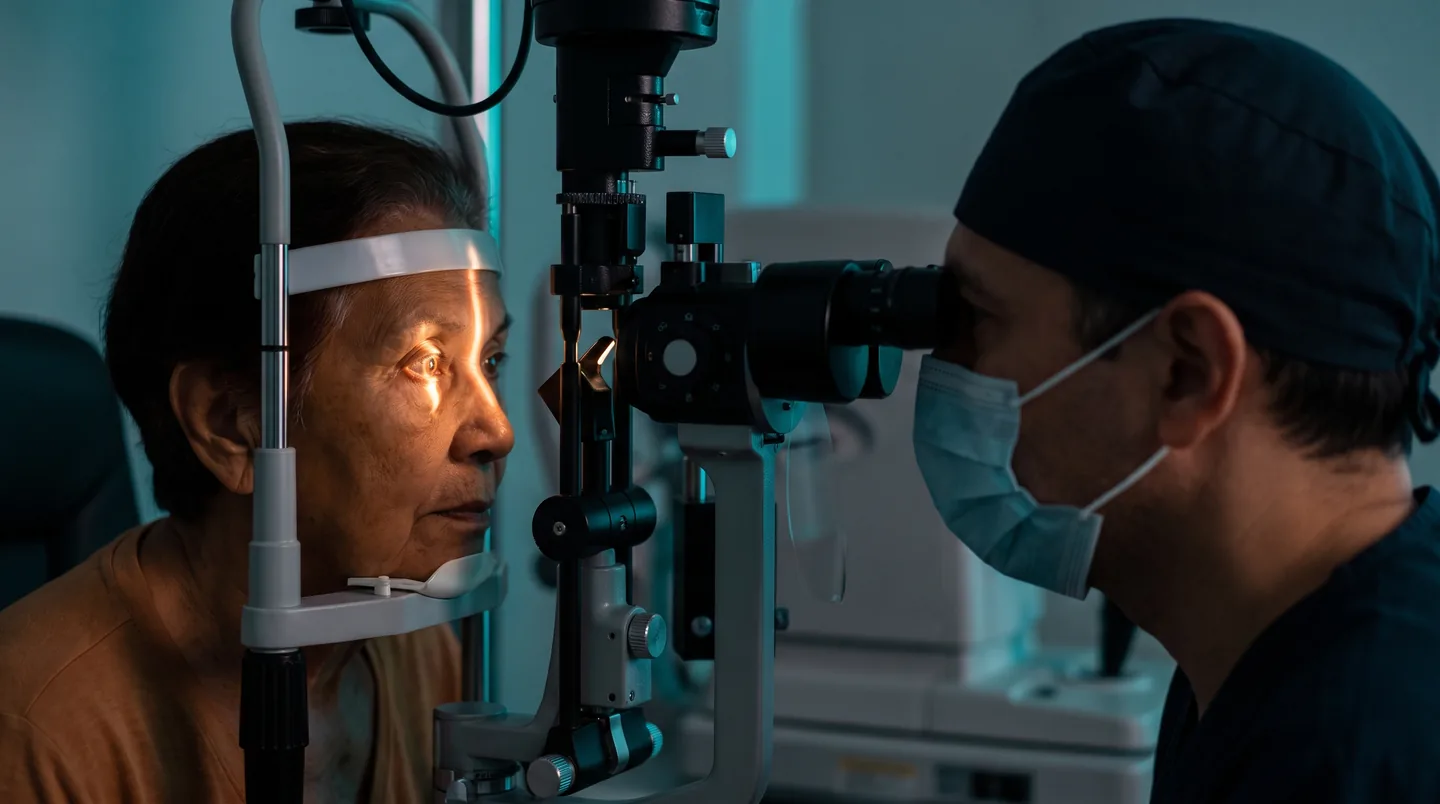
Dilation changes everything here. The classic anterior capsule appearance — a central disc, a clear intermediate zone and a peripheral granular band — is often invisible through an undilated pupil.
- Pupillary margin flakes, sometimes the only sign without dilation.
- Transillumination defects at the pupillary border from iris pigment loss.
- Pigment dispersion, including on the endothelium and heavy, often asymmetric trabecular pigmentation on gonioscopy.
- Poor dilation — itself a warning of what the zonules may be like.
- Phacodonesis or iridodonesis, indicating established zonular weakness.
Asymmetry is characteristic. Clinically unilateral presentation is common, and the fellow eye may convert later, so it does not discharge the other side from follow-up.
Why the glaucoma behaves differently
Pseudoexfoliative glaucoma tends to present with higher pressures, wider diurnal fluctuation and faster progression than primary open-angle glaucoma. It responds less predictably to medical therapy alone, and the threshold for escalating to laser or surgery is correspondingly lower. Treating it as ordinary POAG with an unusual slit-lamp finding is the recurring clinical error.
The cataract surgery problem
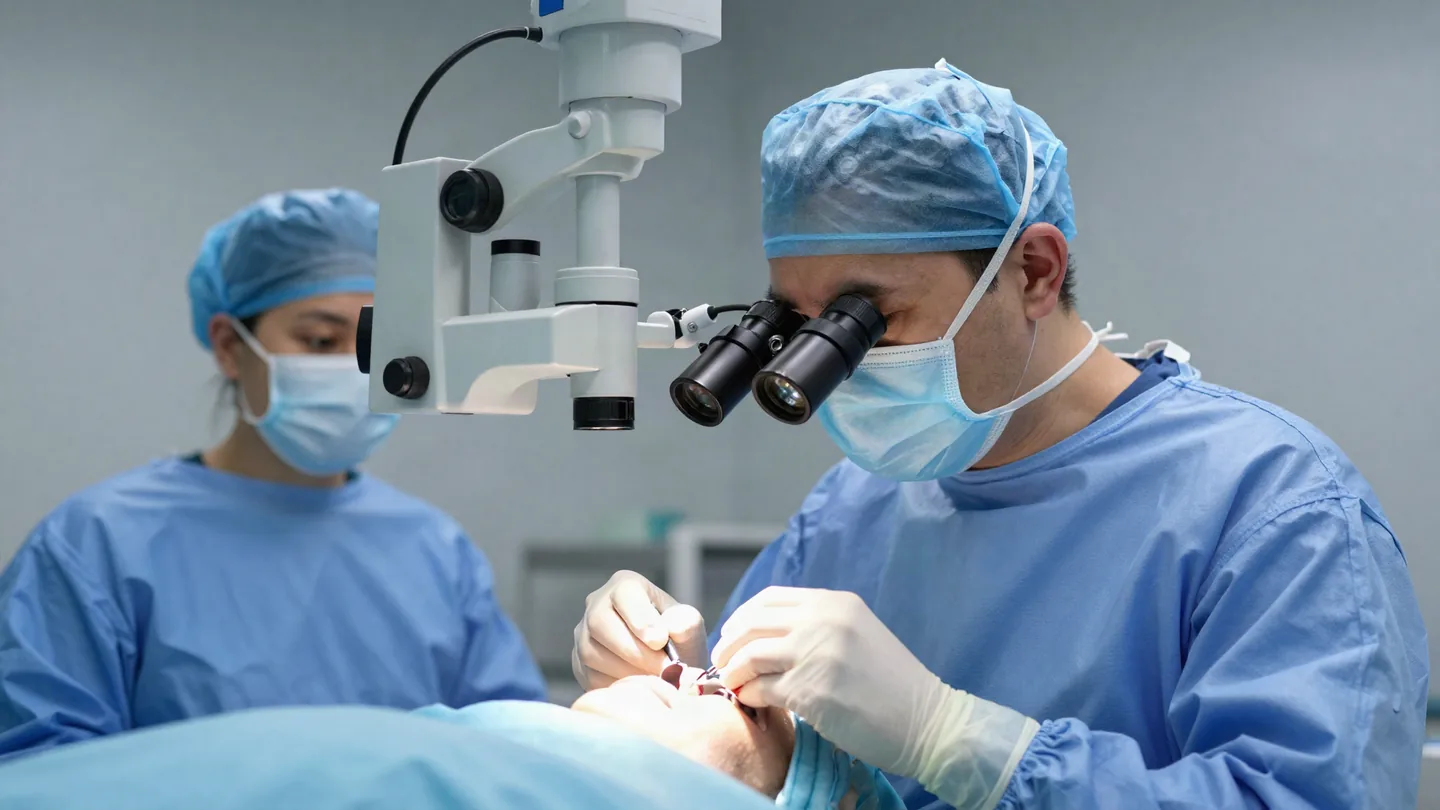
This is where missing the diagnosis becomes costly. The combination of zonular weakness, a pupil that will not dilate and a fragile capsule turns routine phacoemulsification into a case that should have been planned differently — and the patients are elderly, so cataract surgery is frequently the reason they are in front of you.
Recognising PEX before the incision changes the consent conversation, the equipment on the trolley and, often, the surgeon on the list. The glaucoma programme covers this intersection between glaucoma and cataract surgery directly.
Pseudoexfoliation is not a slit-lamp curiosity. It is a warning about the zonules, the pressure and the next operation.
Practical follow-up
Patients with PEX but normal pressure are not glaucoma patients yet — a meaningful proportion will convert, so they warrant periodic pressure checks and disc assessment rather than discharge. Those who already have glaucoma need tighter intervals than equivalent POAG, with attention to diurnal variation that a single clinic reading will not reveal.
Glaucoma education on Ophthalmology Radar
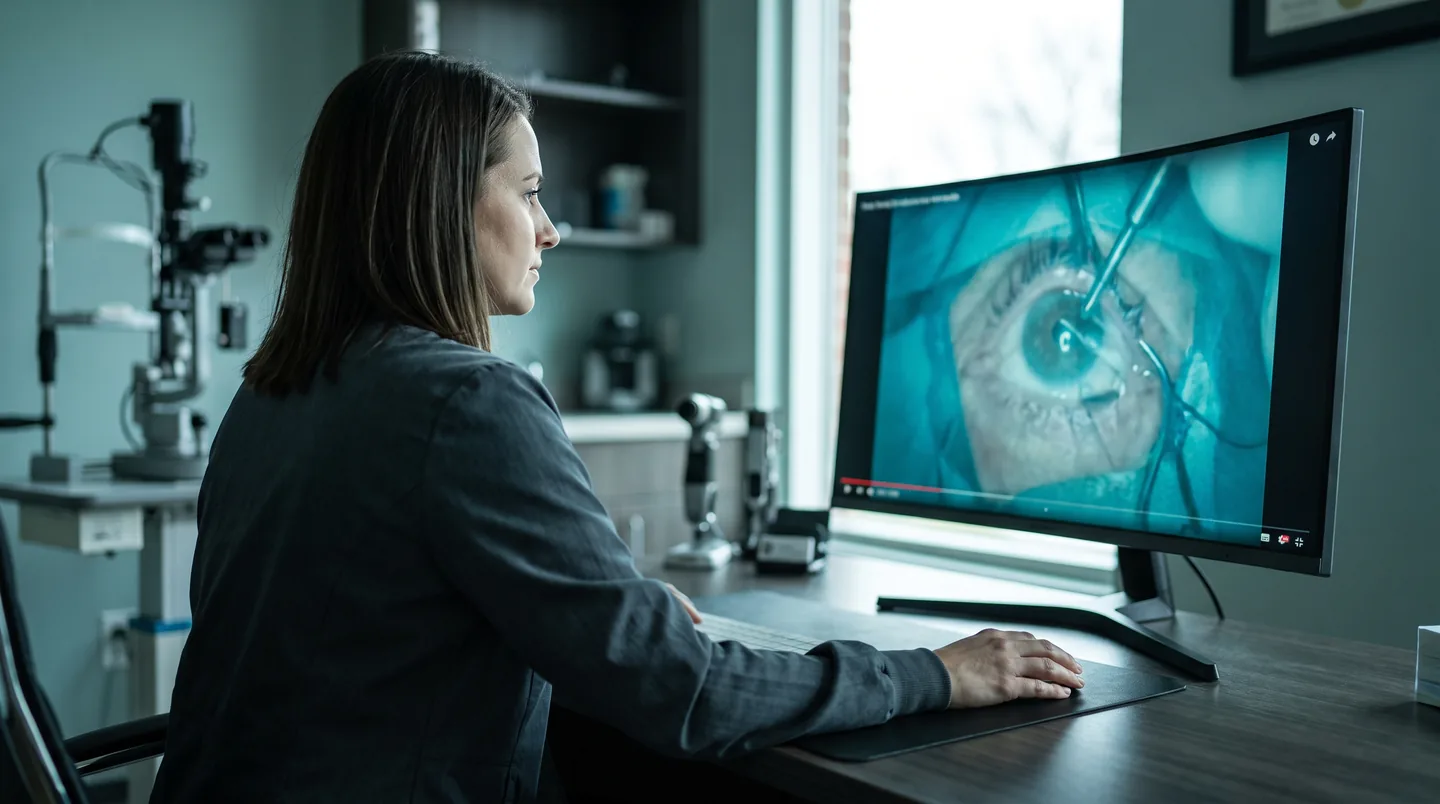
Structured courses and surgical video across filtration surgery, drainage devices, laser and complex clinical cases.
In short
Dilate. Look at the capsule and the pupillary margin. Note the pigment on gonioscopy. If the diagnosis is there, it changes your pressure targets, your follow-up intervals and how you approach that patient's cataract — and all three are much easier to change before surgery than during it.

We connect ophthalmologists worldwide to income, education, events and each other. Written to help you get more from your expertise.